Published: March 9, 2026
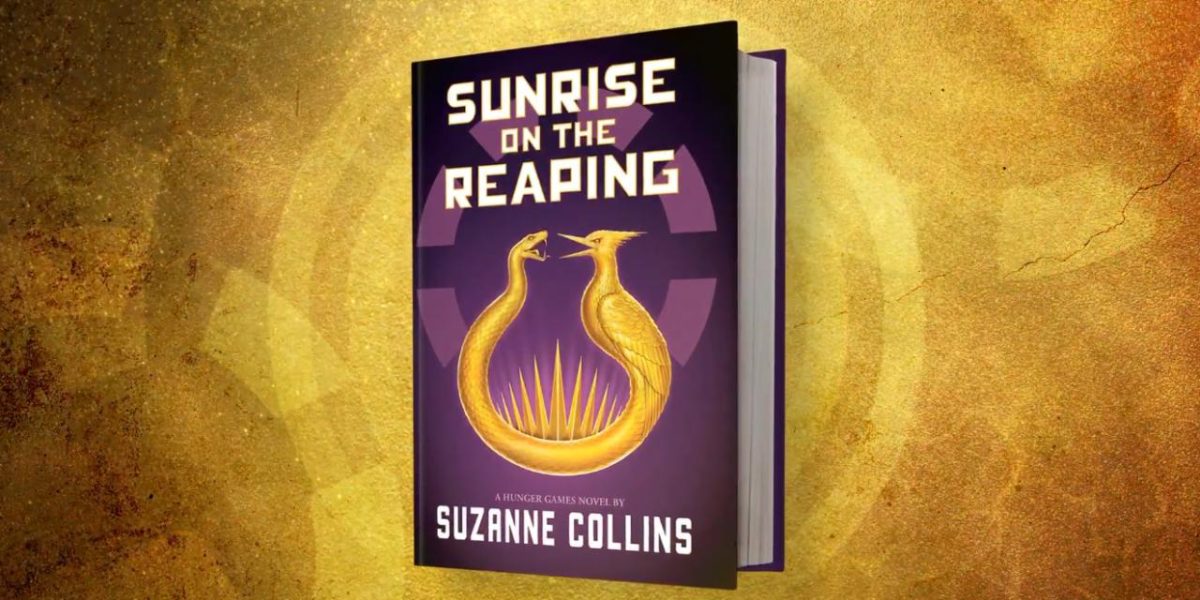
After finishing Susanne Collins’ latest installment in the Hunger Games series, I knew I wanted to write about it– but I wasn’t entirely sure what to say. Sunrise on The Reaping reveals that Haymatch Abernathy, a character who is assumed to have joined the rebellion during the 75th Hunger Games, actually “sunrised” the rebellion 24 years earlier in the 50th Hunger Games.
As a reader, you know going into the book that something tragic happens to Haymitch per his state in the original trilogy, but nothing can prepare you for how truly horrific his story is.
The book brings you through the hardship and manipulation of an authoritarian dictatorship through Haymitch’s perspective, who faces death after death in and outside the arena. The story follows Haymitch as he adopts a “rascal” image to survive the games, which soon leads to his recruitment in a rebel plot to blow up the arena and end the games. Sunrise on The Reaping expands the stories of many characters from the original trilogy, including Plutarch Hevensbee, Beete, Wirus, Mags, and Effie.
Not only did the book satisfy Hunger Games fans’ insatiable need for more story and world-building, but it also engaged in commentary about society. Plutarch, a Capitol citizen from generational wealth, hints to Haymtich and the audience through doublespeak that the games only feel inevitable because people in power spend enormous resources convincing everyone that they are. In reality, the Games have only existed for less than fifty years. I think Collins meant for this illusion of permanence to mirror the way corporate greed and the modern American wealth gap are framed as unavoidable outcomes of a capitalist economy, rather than results of deliberate and oppressive policy choices, deregulation, and decades of consolidation.
In the end, when Haymitch obviously does not end the Hunger Games, Plutarch tells him that he did not fail; they instead just need to wait for a new “rascal,” someone like Haymitch but luckier, and preferably with an army. This foreshadows Katniss’s arc in the original trilogy.
Another theme present in the book was a togetherness that was not present in Katniss’ original Hunger Games. The District tributes who are not from career districts decide to create a career pack of their own called “The Newcomers.” The majority of districts teaming up to defeat the career districts, who usually win, mirrors the larger point that there are more District citizens than Capitol, meaning that if they worked together, they could overthrow the Capitol.
At an Anti-ICE protest I attended in January, a speaker from a hosting organization made a strong statement about the current capitalist society we live in. They said that it didn’t have to be this way, that things can and will change, but it will get worse before it gets better. I think that is one of the main points from Sunrise on The Reaping.