











Published: October 20, 2025
The Department of Justice’s tussle for Maine’s voter registration data has tumbled into the legal system. On September 16, 2025, the Civil Rights Division of the U.S. Department of Justice sued Maine and Oregon in an aggressive legal maneuver to gain access to statewide voter registration data. Since then, additional states have been sued for voter registration data, including California, Michigan, Minnesota, New York, New Hampshire, and most recently Pennsylvania for refusing to comply with the DOJ’s request. Even though Maine Secretary of State Shenna Bellows doubts that the U.S. Department of Justice will back down, she remains resolute in her commitment to protect the voter data of Maine residents and stands with other state election officials across the country who also rebuffed the DOJ’s request. “The Department of Justice seems determined to get voter data from every state. Fortunately, many states are fighting back, and I hope we will prevail.” Secretary Bellows is equally determined to maintain her commitment because she wants Maine residents to feel comfortable freely participating in elections. Additionally, Secretary Bellows cites her constitutional responsibility as a state official to safeguard against any authoritarian overreach from the federal government. If the federal government is able to access voter data nationwide without any impediment, it could cause the electorate to be more hesitant to vote.
Secretary Bellows explained how this request could disrupt democratic participation: “Your First Amendment right to be in a political party or no party at all without fear that the government is watching.” She elaborated further about the possible aftermath of this lawsuit: “The Department of Justice has been involved in targeting its political enemies. So, the idea that they should have a national database on who’s a Democrat or a Republican or in a third party, or not a political party, is very concerning if they will start to make decisions about who to investigate based on who’s a Democrat or who’s a Republican.” Secretary Bellows also wants Maine to remain accessible for students to vote and does not want the voter data to shape any efforts by the Trump administration to suppress the student vote. She credits Maine as a leader of the nation in voter participation, which under ordinary circumstances would validate that the democratic processes in Maine are properly functioning and persuade the federal government to refrain from penalizing Maine.
Even though Maine’s highly attended elections are proven to be secure according to Secretary Bellows, President Trump’s statement that “free, fair, and honest elections unmarred by fraud, errors, or suspicion are fundamental to maintaining our constitutional Republic” is featured prominently at the beginning of the lawsuit against Maine. However, what seemed to be less explicitly outlined was how the DOJ planned to use the voter data if accessed. The nebulous plans for the voter data prompted Maine House Representative Michael Brennan to express his support for Secretary Bellows, adding, “I agree with Secretary Bellows to withhold voter information data from the federal government. It is unclear how the data would be used and protected.” The lawsuit appeared more concerned with justifying the DOJ’s legitimacy to acquire state voter data and reiterating their mission to enhance election integrity. However, Secretary Bellows remains skeptical of the DOJ’s intent for the voter data and is uncomfortable with the DOJ deploying a lawsuit to gain access to the sensitive voter data, which includes unredacted names, social security numbers, political affiliations, and license numbers.
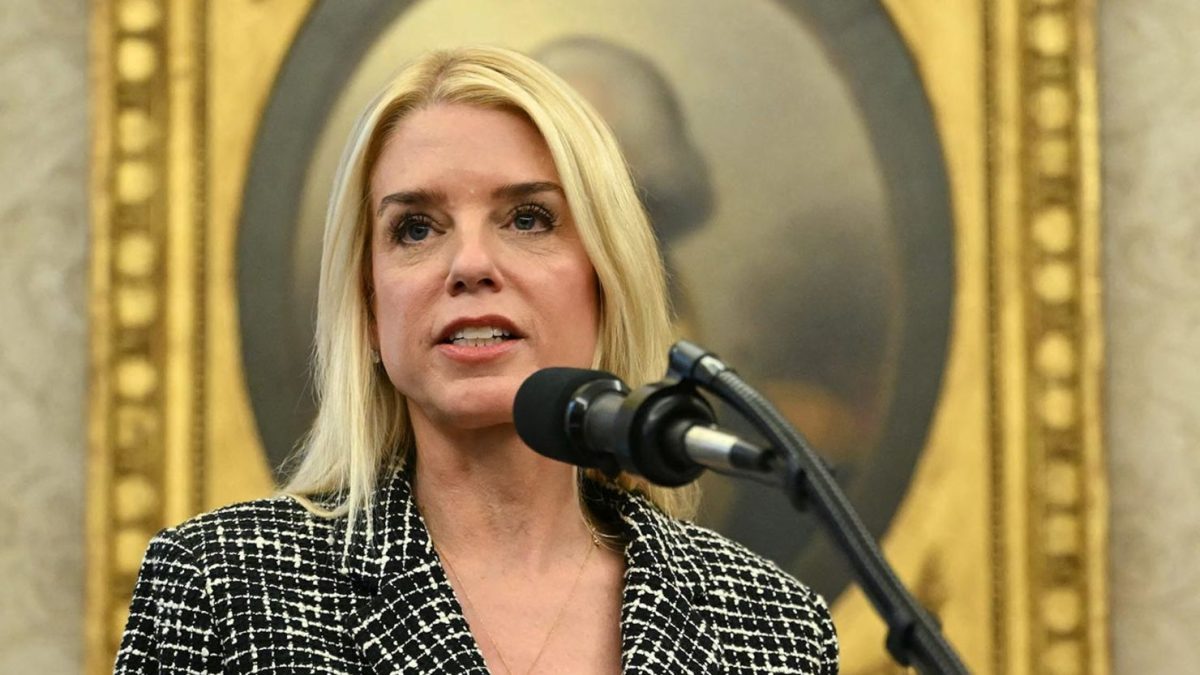
In response to whether this lawsuit has the potential to undermine or boost election integrity, she explained, “I’m concerned that this data request will undermine election integrity, because under the Constitution, the states are in charge of elections, and the federal government should not be interfering.” Even though Attorney General Pamela Bondi declared in another statement that “Clean voter rolls are the foundation of free and fair elections” and justified the lawsuits by asserting that “Every state has a responsibility to ensure that voter registration records are accurate, accessible, and secure —states that don’t fulfill that obligation will see this Department of Justice in court,” Secretary Bellows believes these actions are unnecessary and may cause more harm than help. The DOJ’s lawsuit against Maine and other states for sensitive voter data has the potential to infringe on the delicate balance of power between the states and the federal government. Instead of election integrity, Secretary Bellows ultimately believes that this unprecedented and unusual move to use the legal system to grab voter data is a power grab motivated by partisan politics. As of now, the DOJ has focused its attention on suing states led by Democratic governors, with the exception of New Hampshire. “Traditionally the Department of Justice doesn’t make decisions about who to sue based on politics. This time around, it feels like Maine was targeted because of partisan politics.”