










Published: November 24, 2025
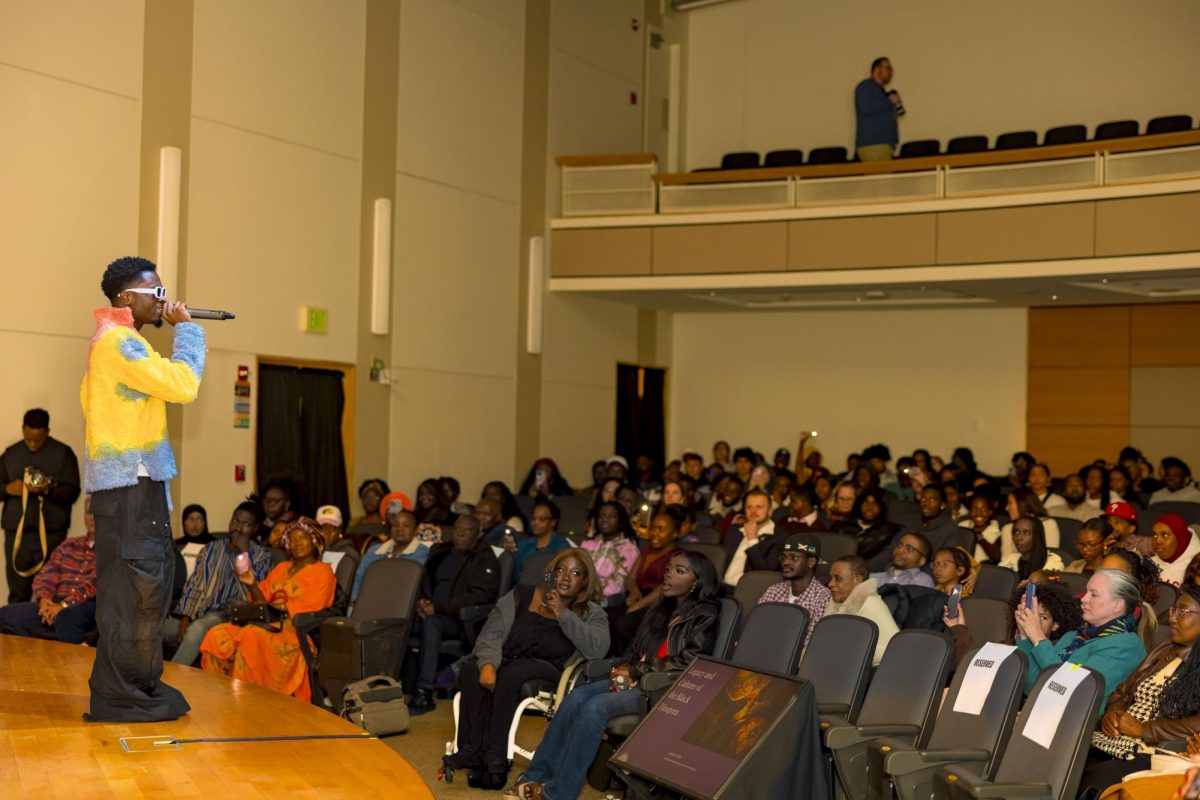
Knocking an event out of the park three years in a row is a huge accomplishment, and Afrochella’s third installment on November 14th was a great example of this. The fashion, the music, and the wide range of cultural representations were stunning, building on the institutional memory and strong community that has developed around this event over the last two years. From the first set of Guinean drum performances opening the event, there was an electricity in the air that was hard to ignore. As incredible as it was to experience the event itself, it was even more amazing to hear about the work that went into making this event happen and how much of an impact it and the ROCC Women of Color have had on people’s lives.
Speaking with the board leading the ROCC Women of Color (a student group partnered with USM’s Recovery-Oriented Campus Center, or ROCC), Afrochella’s purpose each year shows up in three parts: celebrating cultural heritage, recognizing skilled performance, and providing educational value to folks unfamiliar with the depth and diversity of culture represented by these performers. In its third consecutive year, and with the work of the dedicated group of collaborating partners and volunteers, this event delivered each of these things and more. Alumni and previous event participants have continued to contribute to the event even after graduation. This included two MC’s, Karin Muyuka and Favour Agbonsalo (also known as Favour Flav of the Chit Chat Show podcast), both former Afrochella organizers who worked this year alongside Andy Mugisha and Kia Dilamini to build and maintain the crowd’s energy through the night. Returning singers Gerad the Great and Killer Jay – a.k.a. Mr. Vice – brought another round of incredible music to the event, while the duo of Gloria Bila and Paulo Julio closed out the event with their take on Gospel music. The music spoke to joy, resilience, and an unequivocal appreciation for Black and Brown women. These sentiments and their complexity were also showcased in the spoken word section, where poetry from speakers Joseph Inabanza and Johan Sifa highlighted the realities of their experience and how they view themselves in the world – with Johan emphasizing that “an African woman is not a myth.”
Speaking with folks before, during, and after the event, this statement rang true as everyone involved discussed the tremendous amount of work that the ROCC Women of Color board and performers all put into making this happen. Tine Zinyemba, member of the organization’s board, talked about how much practice went into the dance routines and modeling that captured the audience’s attention – nearly four hours of practice every Sunday in the months leading up to the event, alongside all the other duties and responsibilities these performers had going into the event. The environment fostered by this group made a world of difference in this process: “Dance is my passion, dance is my best friend,” said Tine, and having people around her that were willing to learn new skills or to express their existing skills in the same way was energizing. She expressed how impactful it is to have this community at USM, especially when there is so much pressure to conform and not express herself in many spaces. “Why do I have to compromise myself to be in this environment,” Tine questioned, going on to say how much the ROCC and the Women of Color community specifically gave her a place to celebrate rather than compromise. Here, she feels like that connection comes very naturally. “I can talk, I can laugh, I can dance – being homesick is real, but being able to connect with people that experience the same thing and people who have the same background is everything.” On Friday, that connection was stronger than ever, with Tine, the rest of the ROCC Women of Color board, and other performers keeping the crowd amazed with back-to-back dance performances and stunning displays of culturally-informed fashion.
The fashion and the diaspora it represents was the highlight of the event for many. Community members took on the role of models showcasing their takes on their culture and heritage through several themes. OG Afrochella was the first theme, with all-black outfits and classic motifs signifying “the culmination of Black excellence,” followed later by an all-denim set that were just as iconic. The third theme, Sapology, is a Congolese fashion movement that the MC’s described as “elegance and aura,” which these models absolutely delivered in both the outfits’ vibrant colors and the unmistakable confidence in their presentation. The most impressive aspect of the fashion at this event was how much agency the models had in putting together their looks: they were given the general themes and worked to incorporate their personal inspirations into each look, with the end result being a distinct display of excellence and pride.
The fourth theme was arguably the most significant: traditional cultural clothing from these models’ countries of origin. Going country to country, putting up the flag and information about each country on the screen on stage, performers showcased authenticity and heritage through clothing in a way they don’t normally have an opportunity to. Keren Ruboneka, a member of the ROCC Women of Color board and a freshman Nursing major at USM, described the process of inspiration and putting together her outfit as a very personal one. Wearing an umushana wrapper skirt, urugori headpiece, and her hair styled in amasunzo, Keren combined ceremonial Rwandan style with traditional symbols of royalty and elegance. This process was specifically one based in community, as well, getting inspiration and parts of the outfit from her auntie. Keren expressed how powerful it was to have a space to “see people engage in and be proud of their cultures,” and how meaningful Afrochella was. Growing up, she saw the need for events and communities like this around her, and found it crucial to not lose that cultural connection. “As a Black woman, it’s important to have a space to not have to worry,” Keren remarked, echoing the sentiment that motivated the very first Maine Afrochella three years ago. Maine’s spaces can feel very discouraging to cultural expression for Black and Brown people, but Afrochella represents a very intentional effort to make new spaces and to encourage authenticity. Recognizing that current events have been especially difficult for communities of color, Keren mentioned how meaningful efforts like these are. “Right now, our differences aren’t being celebrated as much – when those differences are on display, it’s important to recognize and celebrate that. When folks are being separated from their families and immigration is being attacked, the culture we create is important. Come out, engage, and see what your community is doing”
Maine’s Afrochella, the ROCC Women of Color community, contributors, and the folks who showed up to support and enjoy the event all signify how much this topic resonates with people who haven’t seen themselves represented well in the past. Naomie Bisimwa, president of the ROCC Women of Color board and graduating senior this year, made the event’s mission clear: “Our mission is to amplify the voices of students and create an inclusive space for BIPOC students – especially Black and Brown women who are often underrepresented and face limited access to resources and opportunities.” One contributor spoke to this, as well, highlighting the role of women of color in making this happen. “Black women gather together to bring 250+ to this event every year. There’s a beauty of having a space to connect and celebrate their countries. Institutionally, it feels like we’re disturbing a system by expressing and celebrating our country.” This event means something very special to many folks at USM and across the state, and organizers plan to keep this legacy going. Their hope is that this event’s impact will continue to be felt, and that as this community and the legacy surrounding it grows, the vision of equity’s impact will be respected and recognized.