














Published: February 23, 2026
Have you ever found yourself on the side of I-295 with a flat tire, or in the parking garage with a car that won’t even start? Or maybe you’ve felt out of place in the Autozone parking lot trying to figure out just where that fluid goes… This column can teach you a few quick and easy car skills so you don’t have to call your dad next time something goes wrong.
A dead battery is an “oh shit” moment we’ve all had at some point, especially if you don’t drive your car regularly in the winter. If you go to start your car and are met with a whole lot of nothing, no engine, no headlights, no dash lights, then your battery is dead. If your headlights, radio etc turn on but the engine doesn’t start, you likely have a broken starter motor, but a battery is much more common. Once you’re sure your battery is dead it’s time to jumpstart your car. There are two ways you can jump your car. The first and most common is a set of jumper cables that connect your car’s battery to a running car. The other option is a jump pack, a portable battery with cables so you can jumpstart without another car.
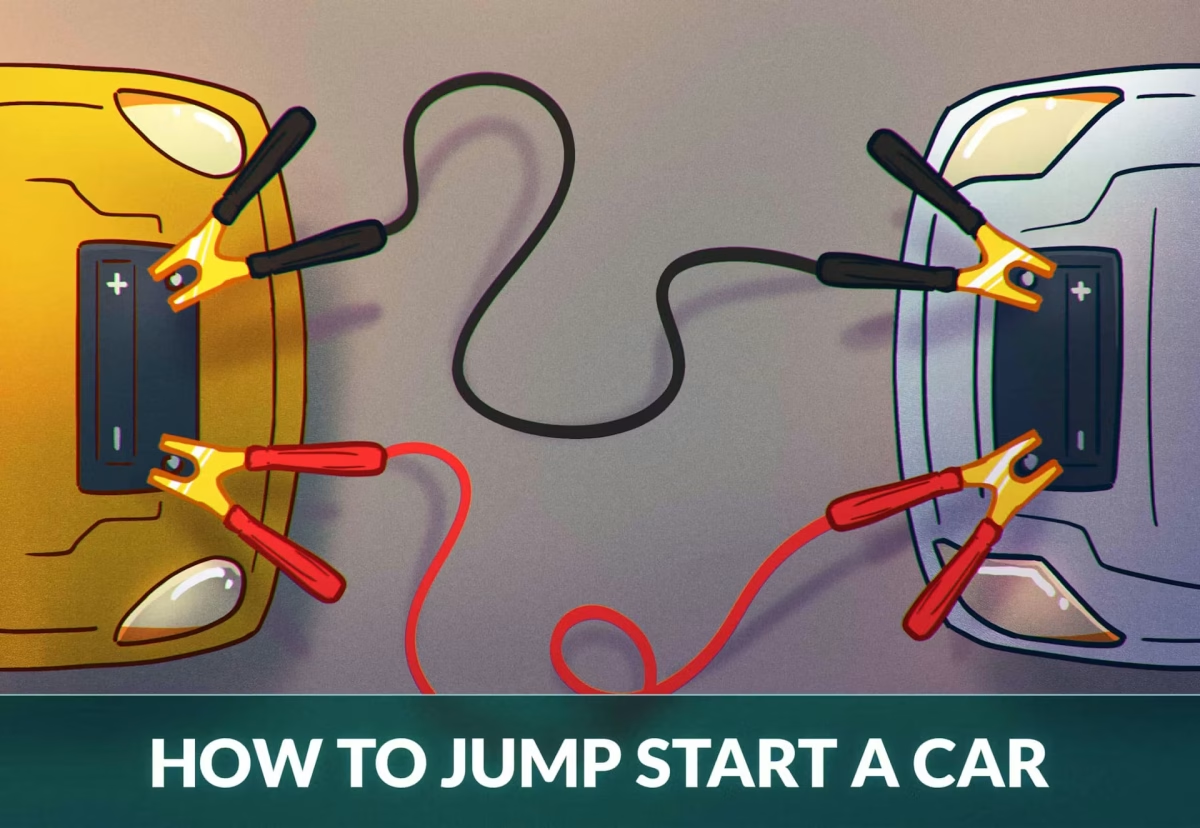
Once you have your cables and car or pack, it’s time to jump your car. The order you connect the cables to your battery is very important:
1: connect the red cable to the positive terminal on the dead battery.
2: connect the other end of the red cable to the positive terminal in the support car.
3: connect the black cable to the negative terminal on the support car.
4: connect the other end of the black cable to a metal, ideally unpainted, part of the car. An easy way to remember this order is “red to dead and red to red, black to black and black to the block.” Before you start the cars, check that your cables are attached positives to positives, negatives to negatives, and that all your clamps are secure and have a good connection to the battery. Now start the support car and let it run for around five to ten minutes depending on how long the dead car has been sitting and how much of a rush you’re in. After the longest ten minutes of your life, attempt to start the dead car, if it fails to start, re-check all your connections and give it another few minutes. Once the dead car starts remove the cables in the opposite order, black from block, black from black, red from red, red from dead. Congrats! you’ve just jumpstarted your car! Let it run or drive for 30min or more to charge the battery. If it fails to start again after that time you may need a new battery or a new alternator.
For a jump pack, the process is exactly the same minus the connection to the other car. If you find yourself with a dead battery on a USM campus, campus security will gladly pull up to jump your car. I highly recommend spending $20 on a cheap pair of jumper cables so you never find yourself stranded, and you’ll be able to help a friend out.
A less dramatic car situation you might find yourself in is needing to top up your car’s oil. Most modern cars will give you a warning on the dash when you need to top up, and older cars will have a light that looks like a teapot on the gauge cluster. You can also check your oil level on your own:
1: Pop the hood, the button or handle is probably in the driver’s footwell, just pull everything you find until you hear the hood open.
2: Reach under the hood to push the latch out of the way, fully open the hood
3: Locate the dipstick, it will be red or yellow, and have either a similar teapot symbol or say OIL.
4: Turn it left, pull it out and wipe it off, a paper towel, a sock, or the sleeve of a shirt you don’t care about will all work fine, just get most of the oil off.
5: Put the dipstick in and out again, near the end of the stick there will be a section with notches or slashes, sometimes with F near the top and L near the bottom, If you see oil near the F or middle you’re good on oil, but if the oil is close to the L or bottom of the stick its time to fill up.
Different cars use different oil, and using the wrong kind can damage your engine. If you have your owners manual, reference it to find the exact oil you need, which will be a letter and number combo such as 5W-30. If you don’t have your owners manual you can search your car’s exact spec using the VIN and Google what oil you need from there. For cars with over 150000 miles I recommend high-milage oil. DO NOT TRUST AI TO TELL YOU WHAT OIL TO USE, IT OFTEN CHOOSES THE WRONG KIND. You can buy oil at autoparts stores, and sometimes hardware stores and Walmart. I recommend grabbing a small funnel at the same time to make pouring easier. Now that you have your oil, locate the filler cap, it will usually be front and center on top of the engine, or directly next to it. The filler cap often features the teapot symbol, the type of oil used, or some other indicator.. Stick your funnel in and slowly pour the quart of oil in. This will remove the oil alert light, and keep your car running smoothly until it’s time for a full oil change.
I hope you found this column useful, next issue I’ll be covering how to change a tire, and do some basic maintenance on most cars.