











Published: September 22, 2025
Starting this issue, I will be writing a recurring local news roundup column. The purpose of this is to summarize a handful of important or otherwise interesting news stories from around the state, with a particular focus on the Greater Portland area. If you know of any local stories that should be included, please reach out to me so I can include it in the next issue. Additionally, you can always contact the editors to request to have a guest story placed in the paper, and you can always apply to be a writer or photographer for the paper.
CMP proposes rate increases – On September 16, Central Maine Power filed to increase rates over a span of five years to improve the electrical grid and hire new employees. Before that can happen, the public utility commission has to officially hear the proposal and public hearings must be held. The first public hearing will take place in Freeport on October 16. Janet Mills opposes the initiative, stating that, “investing in our grid to improve reliability is important, but this request is massive and unacceptable.” CMP said that the customers will see their bill go up by roughly $17 at first, gradually increasing up to about $35 a month by year five. The goal is to accrue an additional $427 million in revenue over time.
CMP has been under increased scrutiny and lost public trust over the past few years, starting with their “SmartCare” automatic meter billing system. Customers reported issues with massive spikes and inaccuracies in their bills. They often received poor customer service, struggling to remediate the issue. CMP faced lawsuits and investigations over this– some of which are still ongoing. As a result of poor customer service and billing errors, Maine’s Public Utilities Commission imposed a $10 million penalty in 2020. PUC also imposed a $500,000 fine the same year for illegally disconnecting customers without approval during the winter. Portland Press Herald found that CMP cut corners when establishing smart meters.
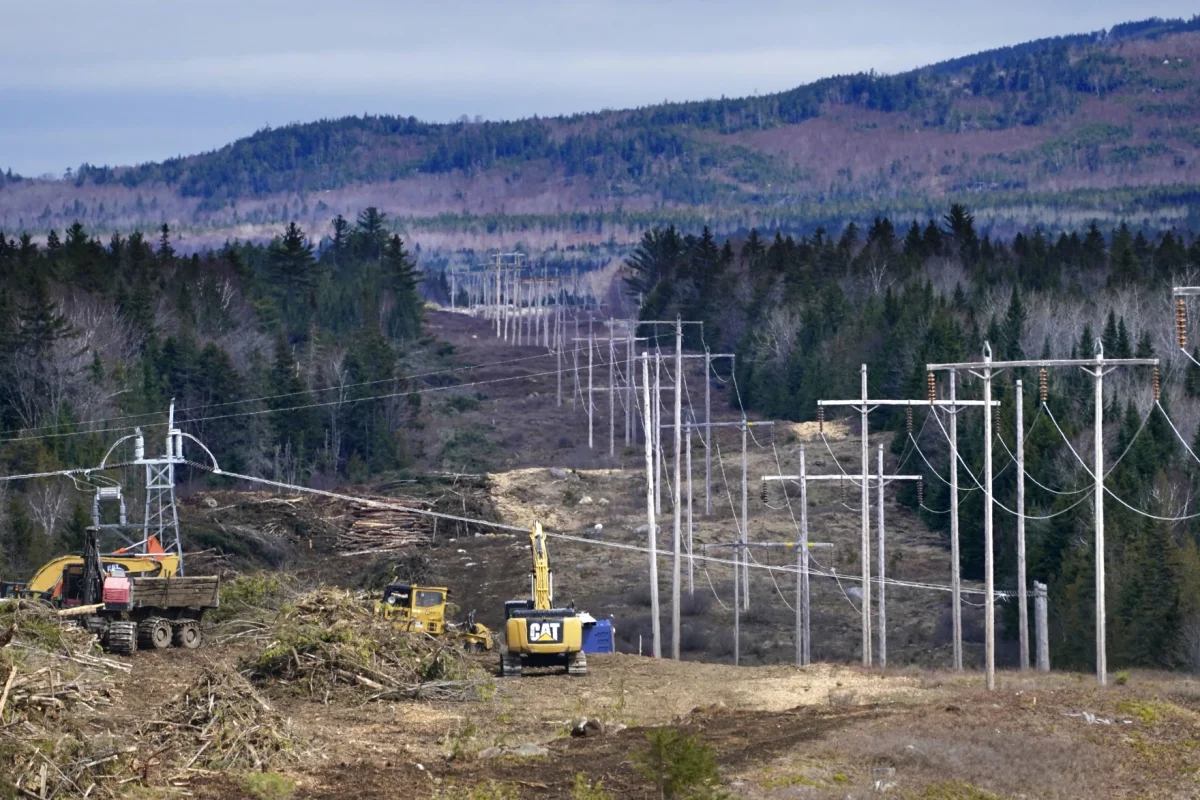
CMP also has faced continued scrutiny over the New England Clean Energy Connect corridor that serves to bring energy from Quebec to the New England grid and primarily Massachusetts. This has been criticized by Mainers due to environmental impacts and a lack of benefit to residents. The corridor cuts through undeveloped forests, wetlands, and streams in northern Maine, causing permanent ecological damage. A referendum to stop the corridor was overwhelmingly successful in 2021, but legal challenges have allowed construction to continue. The corridor is expected to be complete by the end of the year.
Despite this, a referendum to buy out CMP and transition to a public non-profit utility failed after CMP opposed the bill and outspent supporters by a margin of roughly 40 to 1. More recently, a bill that would have allowed anonymous reports of misconduct to PUC and offered financial compensation to whistleblowers was killed in the Maine Senate after receiving bipartisan support in the House.
CMP, owned by the second largest electricity utility – Spanish multinational corporation Iberdrola – is incredibly unpopular in Maine. They have consistently been ranked near the bottom or last by customers compared to other utility companies in J.D. Power rankings. Despite this, Mainers have failed to control the utility company. This time around, the proposed rate increases face significant opposition and may not pass the lengthy review process.
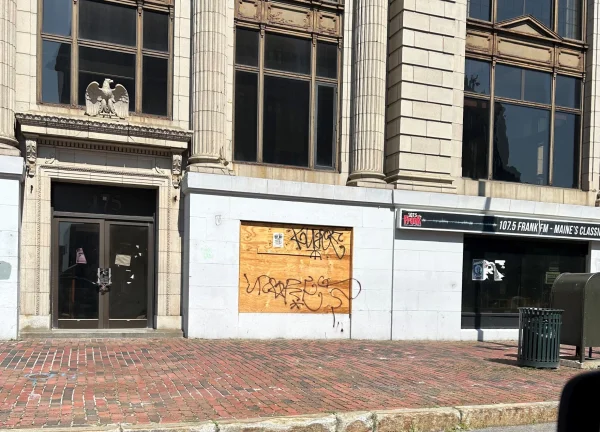
Portland will fine landlords for empty storefronts – Starting January 1, 2026, the city of Portland will begin charging owners of vacant, ground-level storefronts an annual fee for the empty space. After a building has been empty for six months and less than a year, a $500 fine will be applied. The fine increases up to a maximum of $7,500 for ten years of vacancy. The caveat is that owners can avoid fines by allowing the city to install artwork in their windows. The city will also help owners look for tenants.
If you’ve walked down Congress Street then you’ve likely noticed the amount of “for lease” signs in windows. This ordinance aims at curbing this issue – or at least making the empty buildings a little nicer to look at. Both supporters and opponents of the ordinance in city council, including Mayor Mark Dion (who voted against it), have blamed unhoused people for the issue. Dion has stated that when owners leave their spaces vacant, it is because they are “try[ing] to tell you something about their experience in that market,” and that it does not matter if art is placed in buildings, because “if… someone is passed out on the sidewalk with a needle in their arm, I don’t know what we have accomplished.” It remains to be seen if this will have any practical effect on Portland’s economy, labor market, or population, but it’s hard to be upset with the prospect of more art being visible in public places.
Portland Establishes Social Housing Task Force –In March this year, Portland City Council passed a resolution to form a Social Housing Task Force, and on August 18th, they held their inaugural meeting. The purpose of the task force is to “study and propose a framework for government-led social housing, prioritizing permanent affordability, environmental sustainability, and inclusivity.”
The term “social housing” broadly refers to housing owned publicly by the government, community or tenant cooperatives, or non-profits. In social housing models, rent is generally set based on income levels, as opposed to “market rates” determined by private equity, hedge funds, and their profit-maximizing algorithms. It mainly differs from “public housing,” by allowing mixed-income tenants. This aims to reduce stigma and avoid trapping people in poverty with the creation of isolated communities of low-income and marginalized people with little access to resources and jobs.
Portland mayor, Mark Dion, has maintained that the recent effort is intended to serve middle-income people that cannot afford market-rate housing, and that the intention is not to put the city “in the construction business,” or to be “long-term landlords.”
The task force members include a representative from an affordable housing developer, one from a market developer, at least three Portland residents with “relevant knowledge,” one member of city council, one member of Portland Housing Authority, and at least two community members “from underserved populations with lived experience navigating the challenging housing environment in Portland.” The names of the members are available publicly online.
Portland has long struggled with a housing shortage and out-of-control rent and home prices. Many point to strict zoning laws, luxury apartments and short-term rentals that subtract from available housing for middle and low-income individuals and families, shrinking wages, and failures of the profit-driven market. Social housing proposes a solution where the market has failed, but does not address low wages, zoning laws that prevent housing from being built, or an excess of luxury housing. Still, social housing presents a new solution for the city, and allows greater control over rent prices. The task force is expected to release their report around August 2026.