











Published: April 30, 2026
As the 1920s come to an end in a Berlin nightclub, a flamboyant Master of Ceremonies welcomes the audience to Cabaret, promising escape. However, the show offers more than entertainment. Through the Emcee’s sharp, provocative performances, the musical reveals the vibrant yet fragile lives of Berlin’s residents. Cabaret balances spectacle with a sobering look at a society on the verge of irreversible change.
Presented by the USM Department of Theatre in collaboration with the Osher School of Music, this production delivered on the show’s energy, emotional weight, and historical gravity.
The musical is based on a play by John Van Druten and stories by Christopher Isherwood, with the book written by Joe Masteroff. Its iconic score features music by John Kander and lyrics by Fred Ebb. This particular production was brought to life under the direction of Danny Hutchins, with musical direction by Edward Reichert and choreography by Vanessa Beyland.
Before attending, I knew very little about Cabaret. It isn’t something I’d usually see, but after a fellow Free Press editor mentioned the upcoming production, I decided to go. I was unsure what to expect and honestly, nervous about reviewing something that seemed outside my writing wheelhouse.
Those concerns quickly disappeared. From the moment the dress rehearsal began, it was clear this was an exceptionally strong production. The cast as a whole brought an impressive level of commitment and talent to the stage. They put on an extremely memorable and lively performance.
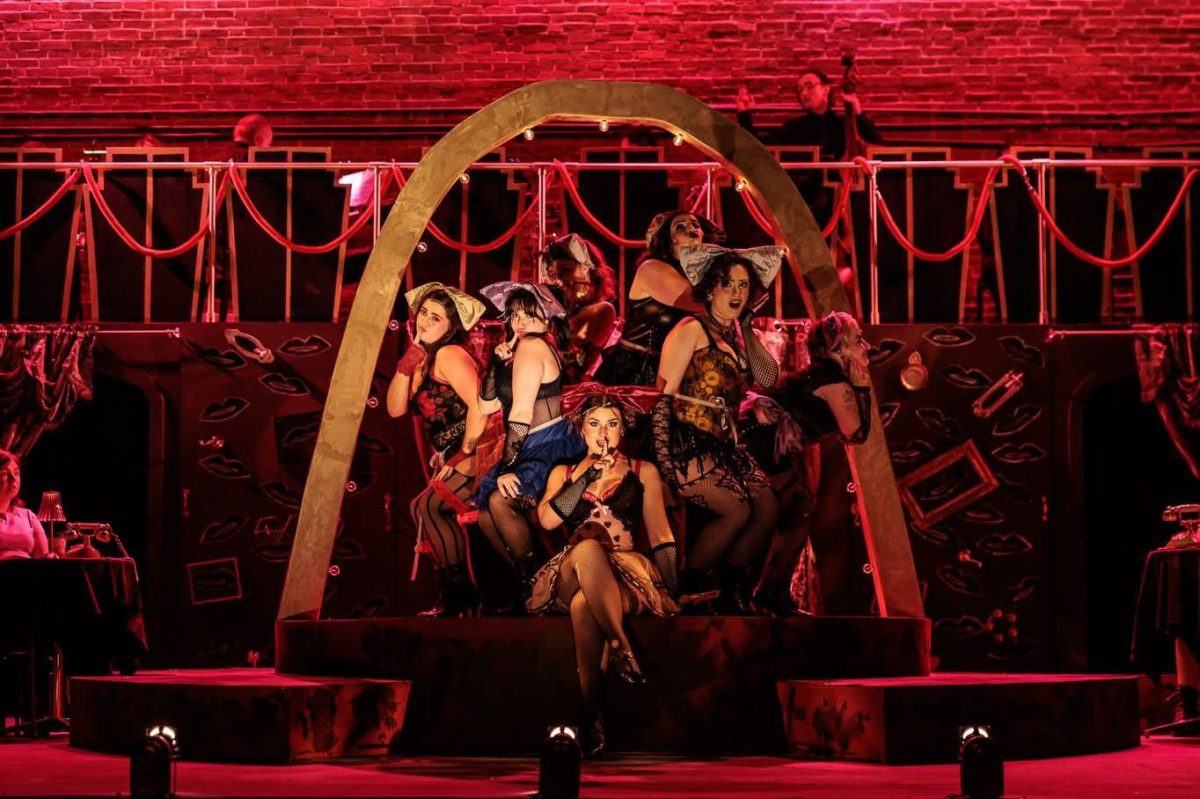
Benet Moholland’s portrayal of the Emcee stood out immediately. His presence was magnetic, effortlessly commanding attention and drawing the audience into the world of the Kit Kat Club. He struck a careful balance between humor and unease, delivering performances that were as entertaining as they were unsettling, which is clearly a crucial element in capturing the tone of Cabaret.
Karoline Brechter as Sally Bowles and Will Searway as Clifford Bradshaw were equally compelling. Brechter brought a layered vulnerability to Sally, capturing both her charm and her underlying fragility, while Searway grounded the story with a thoughtful performance. Together, they created a dynamic that felt authentic and emotionally engaging.
The Kit Kat Club ensemble deserves special recognition for maintaining an incredible level of energy throughout the production. I was in awe of the liveliness they brought to the show with their vibrant, animated performances. The club itself felt alive and absolutely enhanced the show’s atmosphere.
Even as the performance stretched later into the evening, the cast never lost momentum, which I admired. The Emcee and the ensemble ensured that the audience remained fully engaged from start to finish, a testament to both their stamina and their stage presence.
Additionally, the Osher School of Music did an outstanding job bringing this complex and demanding production to life. The orchestra added such depth and richness to the show, completely elevating the production’s emotional impact.
What makes this production particularly impactful is its handling of difficult subject matter. Cabaret deals with sensitive topics such as anti-Semitism, Nazi-ism, abortion, and domestic violence. It was clear to me that the cast navigated these topics with care and intention, allowing the story’s darker elements to emerge naturally without overshadowing the humanity of its characters.
This production of Cabaret was both entertaining and nonplussing in the best way. It invited the audience to enjoy the spectacle while also asking them to reflect on the world beyond the stage. For those, like myself, who may have been unfamiliar with the musical, it served as a powerful introduction and a reminder of theatre’s ability to both captivate and challenge its audience.
Cabaret was performed from April 2-12, leaving a lasting impression as an extremely thought-provoking production.