













Published: April 13, 2026
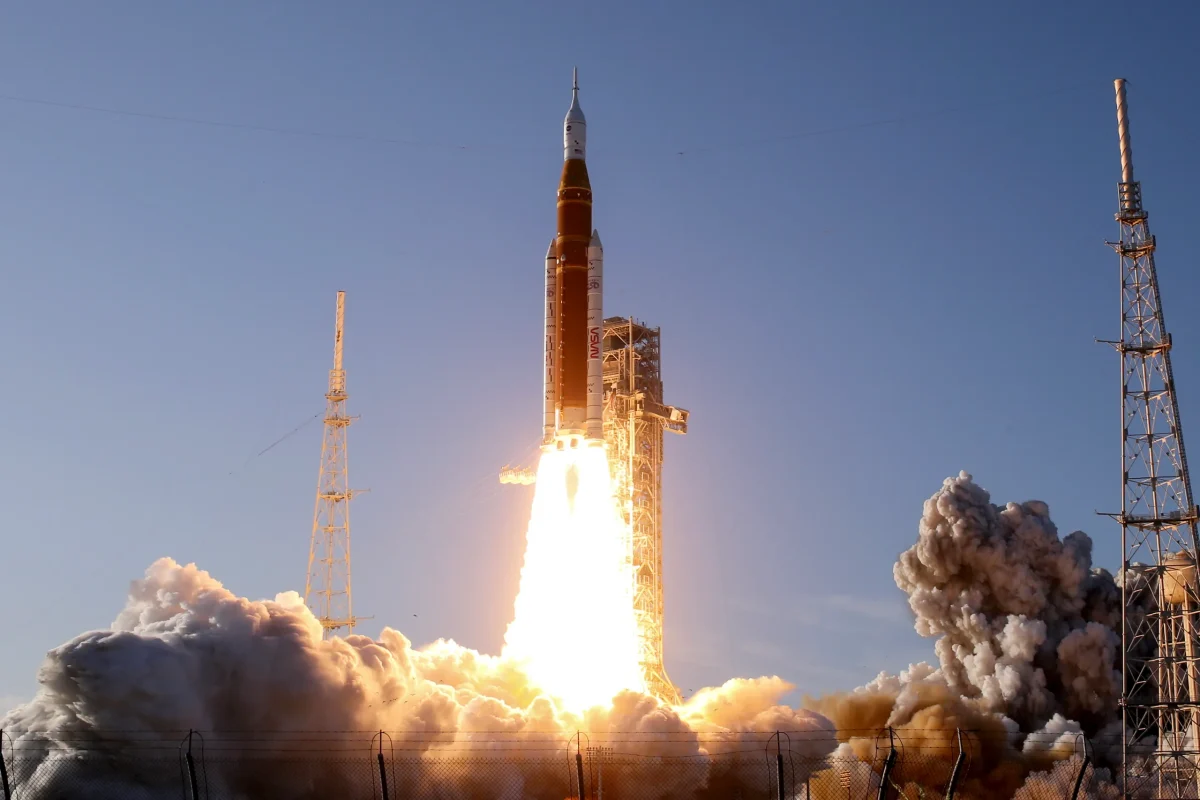
he Artemis II mission, which began in April 2026, marks the first time humans have returned to the vicinity of the Moon in over 50 years. The last time humans went to the moon was December 1972, during the Apollo 17 mission. But this time, our astronauts went farther than anyone has ever gone in orbit before. “The Artemis II mission’s spacecraft, Orion, broke the record for human travel at about 13:56 EDT (18:56 BST) on Monday, beating a record of 248,655 miles (400,000km) held since 1970 by the Apollo 13 mission,” stated a BBC article.
This four-person crew, comprising Reid Wiseman, Victor Glover, Christina Koch, and Jeremy Hansen, witnessed a total eclipse of the Sun as the moon blocked out the light while in orbit. The spacecraft was never planned to land on the moon; however, it did plan to fly around its far side, so NASA could see the side of the moon that has never been visible from Earth. Satellites have photographed this far side before, but these four humans were the first ever to see it with human eyes. Reid Wiseman told President Trump, “We saw sights that no human has ever seen, not even Apollo, and that was amazing for us.”
For 40 minutes, the spacecraft named Orion lost all signal to Earth as it went behind the moon. It was a long 40 minutes, but when Earth finally regained communication, it was such a historic moment for all of the United States, because not only had it gone further than any other spacecraft, but it also brought four humans safely around the moon.
Artemis II was a flight test to see if humans can safely land back on the moon, because it hasn’t been done since 1972. With the technology in 2026, and how overwhelming Artemis II’s success has been, I am so excited and hopeful for what the future holds. There are even claims that NASA not only wants to land humans on the moon again, but also send humans to Mars.
The spacecraft, Orion, has proven its power and the ability of its thermal system while it coped with no direct sunlight for over an hour, and its heating and cooling system during the eclipse. Orion has made its closest sweep past the moon.
After several exciting days of success for the crew, it is finally time to head home. This phase will be marked by quieter days filled with checks and experiments before they are ultimately cleared for the fiery plunge back into Earth’s atmosphere. Traveling at nearly 25,000 miles per hour toward the Pacific Ocean, they will test the capsule’s heat shield and recovery system.
The four brave astronauts are now close to completing their mission, with their return set for Friday, April 10, 2026.