












Published: April 13, 2026
I did not really understand what was going on with the Iran war at first. It was always in the news but was hard to piece together, so I started with the most basic question: what actually happened?
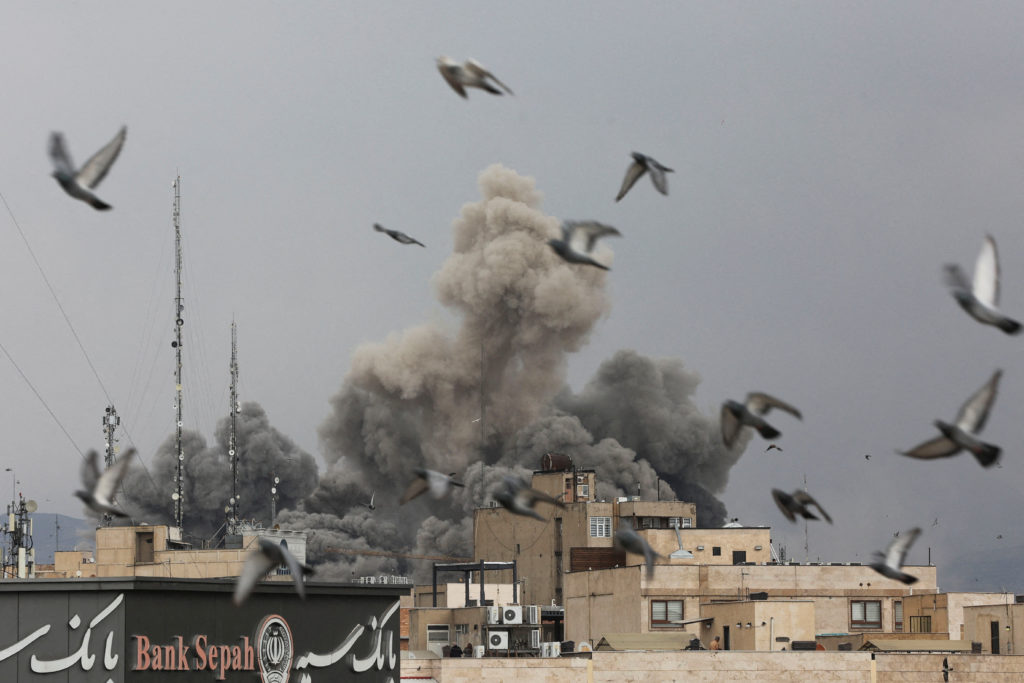
The conflict started on February 28, 2026, when the United States and Israel conducted a large-scale coordinated air campaign against Iran. These airstrikes targeted military installations, nuclear facilities, and government leadership compounds. Within hours, hundreds of munitions were deployed, resulting in the death of Iran’s Supreme Leader during the initial bombardment.
Naturally, that immediately raised the next question for me: why would they do that?
It turns out this was not sudden at all. Tension between these countries had been building for years. Much of it revolved around Iran’s nuclear program. Iran claimed it was for energy, but the United States and Israel suspected it could lead to nuclear weapons. For years, there were ongoing sanctions, failed negotiations, and smaller conflicts. Tensions worsened in 2024 and 2025, including direct missile exchanges between Iran and Israel. By early 2026, the situation had reached a breaking point. On February 28, 2026, the airstrikes began, pushing the situation into full-scale war.
With that in mind, I wondered, what did Iran do in response?
Iran retaliated almost immediately after the February 28, 2026, airstrikes with missile and drone attacks. These attacks targeted not only Israel, but also U.S. military bases and allied countries across the Middle East. Within hours, some strikes hit key infrastructure and cities, spreading the conflict beyond just three countries.
I kept reading about oil prices, which made me question them. Why would a Middle Eastern conflict influence global fuel costs?
The answer is the Strait of Hormuz. It is a narrow waterway where about 20 percent of the world’s oil passes. During the early days of the war, starting in late February and March 2026, Iran attacked ships and threatened to block this route. This disrupted global trade, leading to higher energy prices. This is why people far outside the region are feeling the effects, even if they are not directly involved in the fighting.
I also wanted to know what the human impact actually looks like, because news numbers can feel abstract. The reality is that the war has caused major damage and loss of life, including both military and civilian casualties. For example, in one early March 2026 strike, more than 160 civilians were killed when a missile hit near a school.
After examining the consequences, I kept asking: is it over?
The answer right now is… not really. There have been attempts at ceasefires, but they are unstable and often break down. Fighting has slowed in some areas, but tensions remain high, and no long-term agreement has been reached.
The most straightforward way to explain this war is that it encompasses more than a single incident. It is the outcome of prolonged antagonism, a pivotal escalation in February 2026, and a conflict whose progression remains uncertain.
My initial question was “what is even happening?” but research revealed the conflict’s extensive complexity. It influences international relations, economies, and ordinary lives far beyond the immediate war zone.