







Published: December 8, 2025
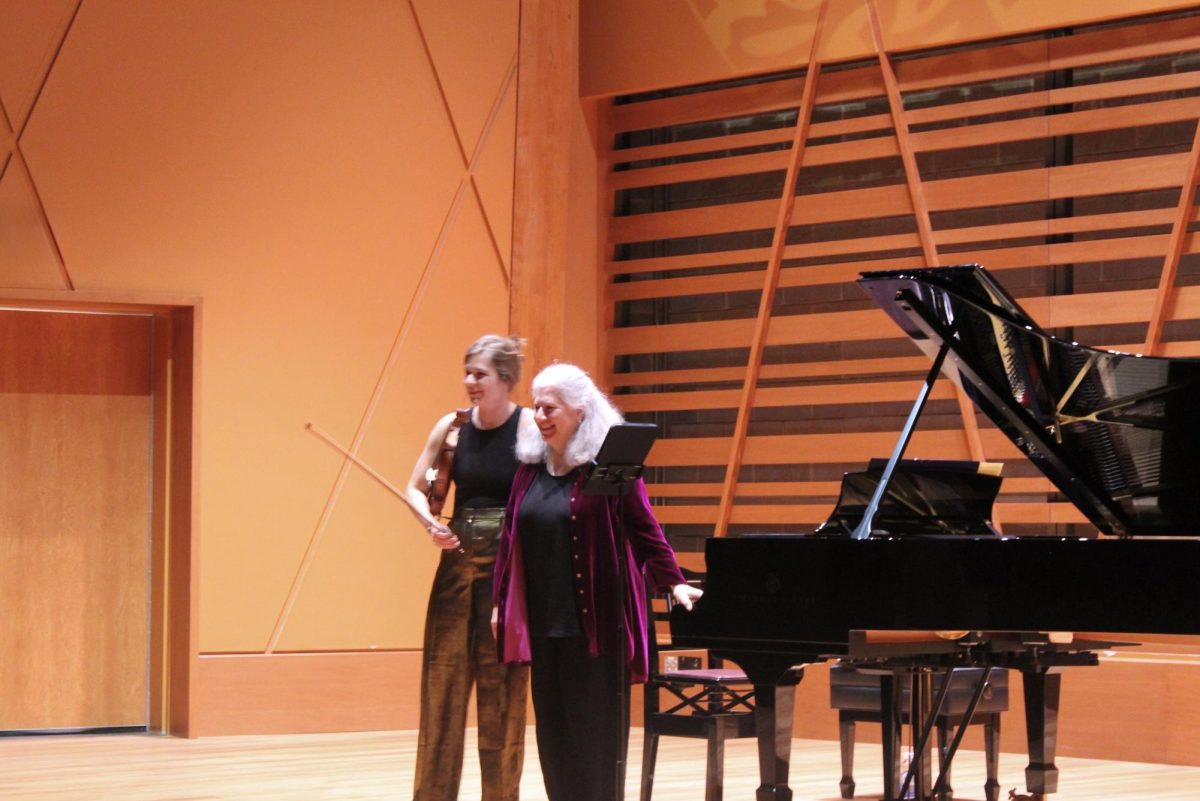
On November 6, 2026, enthusiastic community members across Maine assembled together at the Kate Cheney Chappell ’83 Center for Book Art to enjoy the presentation “Concept to Finish Line, or How I Make Books” given by Rebecca Goodale. Goodale led the audience on a colorful autobiographical journey that wove in an introduction to a range of artistic techniques that they could adopt for themselves. Community member and sculptor Zyanno Duryea, from Southland, ME, commented that she attended the lecture in support of her friend. This sentiment was shared by many others in attendance, including Judy Sobol, an art historian from Falmouth, ME, who appreciated Goodale’s dedication to reaching out to the community. At the start of the presentation, Goodale remarked that her interest in book arts can be traced back to 1958, when she constructed her first book, My Chicken. Then in art school, she further developed her artistic talents in printmaking, weaving, and textile design. Goodale treasures the ability of art to connect her to her friends, and she reminisced about how her French lessons from the 7th grade were put to good use when she traveled to Paris and Versailles in 1993 with her friend Patty to immerse themselves in art. She added, “We had a wonderful time.”
Then in 2000, Goodale turned her artistic gaze to her roots in Maine and felt inspired to feature and memorialize rare plants and animals in a book about threatened and endangered species. As with all of her art, Goodale captured the essence of Maine’s rare plants and animals by carefully choosing the form and medium that would be best suited for the subject. Even as a child, Goodale understood how mere cereal boxes could be transformed into a bustling town by using this technique.
Afterwards, in 2014, she traveled to southern France and created two books that reflected her experience, with one book constructed into the shape of bold red flowers. The trail of flowers matched the beauty of a bouquet. She then detailed techniques, such as drypoint, also known as letterpress, block printing, and foil stamping. She embraces a collaborative approach and values the unique input of her friends, whether it is a friend who completes the dry press or a friend who adds written text. In addition to the book sending a message through bold colors and textures, she strives to add another artistic dimension by including a poem or a brief didactic statement.
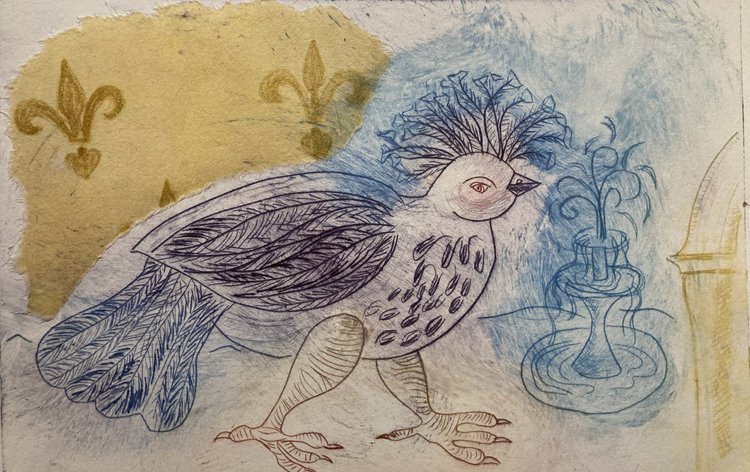
She combines the skills and techniques that she’s developed in other artistic mediums, such as textile design, to add even more texture and beauty to her book art. She also combines her knowledge and fascination with historical events to inspire her art. Goodale recalled being fascinated with the dire fate of the Menagerie, a grand royal zoo of the Palace of Versailles, which met its untimely end during the French Revolution after the peasants turned the exotic animals into their meals. Only five animals remained and were led on a brief, almost victorious walk from Versailles to Paris. Not only was Goodale prompted to recreate these historical events, but she also wanted to use her book arts almost like a time capsule to bring spectators back to this victory walk. She remarked how she wanted the book to resemble a parade of animals, and even though the species of those victorious five animals are extinct, they can live in the imagination of her readers. The title of this creation, Versailles a Paris avec Patty, was also inspired by a friend, who harped, “Long titles are good.” Kate Cheney Chappell, a dear friend of Goodale, expressed what inspires her about book arts: “It is so open-ended.” She added how book arts welcomed artistic freedom and opened the door for artists to find a place for themselves, since this medium can take on so many forms. You can explore more of Rebecca Goodale’s art at rebeccagoodale.com.