












Published: September 22, 2025
Entertainment evolves with society, but lately, movie theaters have struggled. Hollywood wonders why. The causes are complex and signal shifts in the film industry.
Most of the issues can be connected back to the COVID-19 pandemic. Pre-pandemic, 2019 was one of the most successful years ever for Hollywood at the box office. We got 9 billion-dollar movies released that year including, Avengers: Endgame ($2.79 billion), The Lion King ($1.66 billion), Frozen II ($1.45 billion), Spider-Man: Far From Home ($1.13 billion), Captain Marvel ($1.13 billion), Joker ($1.074 billion), Toy Story 4 ($1.073 billion), Star Wars: The Rise of Skywalker ($1.07 billion), and Aladdin ($1.05 billion). Since then, we have had 11 billion-dollar movies across the past five years. So what happened?
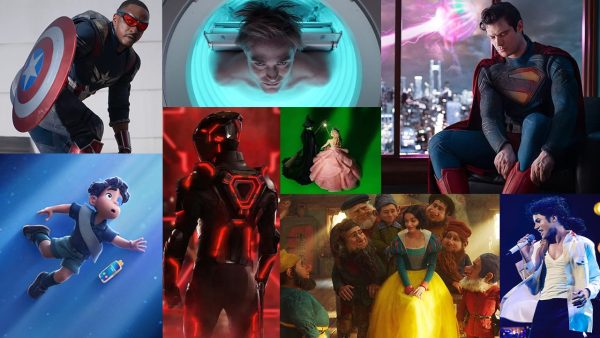
Attention spans have grown shorter. The pandemic resulted in everyone being at home, becoming more and more attached to their phones where short form content was a scroll away. This is also the time when streaming rose to power. Netflix had been going for years and was nothing new, but Disney+ had just launched in November of 2019, with other film studios set to launch their own streaming services within the following year. This was a period where movie theaters were temporarily closed, and streaming was all we could rely on for our entertainment. That’s when audiences discovered how incredibly convenient it was. Thus began the beginning of the end. Netflix CEO Ted Sarandos even said himself that “Movie theaters are dying” and the model is “outdated.” When theaters reopened, audiences lost the motivation to leave their homes and didn’t see the value in seeing new films in the cinema.
When audiences did return, they found that the value was often inferior to the experience they had in the comfort of their own homes. Movie theaters are messy. And concessions are expensive. But of course that’s how theaters make their money. Movie theaters make very little off ticket sales as the majority of that profit goes straight to the studios. Concessions are priced so high because that’s a theater’s main source of income. However, most folks can’t afford to pay those prices for snacks, especially coming fresh off a worldwide pandemic. Coupled with the horrific theater etiquette that emerged post pandemic as well (people are always scrolling on their phones and talking during the movies), it just doesn’t seem worth it to most moviegoers, especially when theatrical windows changed.
Traditional theatrical windows used to feature a film playing in theaters for 90 days before becoming available on other platforms such as VOD, streaming, and DVD/Blu-Ray. Now, films are sometimes being released digitally to watch at home just two weeks after its initial release in theaters. Audiences questioned why they should spend their time and money going to watch a new film in a movie theater, when they can wait just mere weeks to watch at home.
How about we look on the bright side? What are the positives we’ve seen pop up within the film industry within recent years? What can we do to save the movie theater industry?

2023 was the beginning of the collectable popcorn bucket trend. And it became even more of a trend after the widely memed Dune Part II popcorn bucket. Now, nearly every movie receives a specialty popcorn bucket alongside its release. Most of these are not sold online, and therefore drive customers to have to go to the theater and purchase these collectables, resulting in more business for the theater.
As easy as content is to access on streaming nowadays, movie theaters need to make releases into events in order to incentivize the general public to spend their time and money. Look at the “Barbenheimer” trend from 2023, for example. The biggest reason both Barbie and Oppenheimer performed so well at the box-office is because of the double feature trend. A Minecraft Movie is a more recent example, seeing particularly younger audiences flock to cinemas just to yell “Chicken Jockey!” on the screen. Why did that enrich the experience? I don’t know, but it made the movie money, so I say we call it a win.
Re-releases have increased tremendously and are bringing a lot more audiences back to the multiplex. When a classic film’s milestone anniversary rolls around, they are being re-released in theaters for a limited time. Studios are realizing that some of these re-releases are performing even better than the new releases. From Jaws, to Toy Story, Batman, The Breakfast Club, all 3 of Sam Raimi’s Spider-Man films, and even the complete Twilight Saga releasing for the book’s 20th anniversary next month. Some theaters are even doing their own monthly throwback movie releases like Flashback at Flagship Cinemas, and Take us Back Tuesdays at the historic Strand theater in Skowhegan, Maine. So why are movies that you can watch for free at home attracting so many new faces at the theaters? These screenings bring a sense of nostalgia, which has become a very powerful tool in recent years for Hollywood. Whether it’s your first time watching the film, your first time watching it in theaters, or revisiting a classic you saw in theaters when you were younger, the retro quality brings a warmth to the experience and makes it feel more special then just throwing it on in the background at home. It’s also being reported that audiences at these screenings are in fact glued to the film screens, as opposed to scrolling on their phones the entire runtime.
So, are movie theaters dying? Business is certainly down from what it was a few years ago, and changes certainly do need to be made, but I don’t think the theatrical model is going anywhere. Audiences are now just more picky about what movies they’re willing to spend money on, and studios need to find a way to combat that, and tailor to what the audiences will pay for. In a world where streaming is king, the movie theater is still relevant. So please, if you can, support your local movie theaters!


