












Published: March 30, 2026
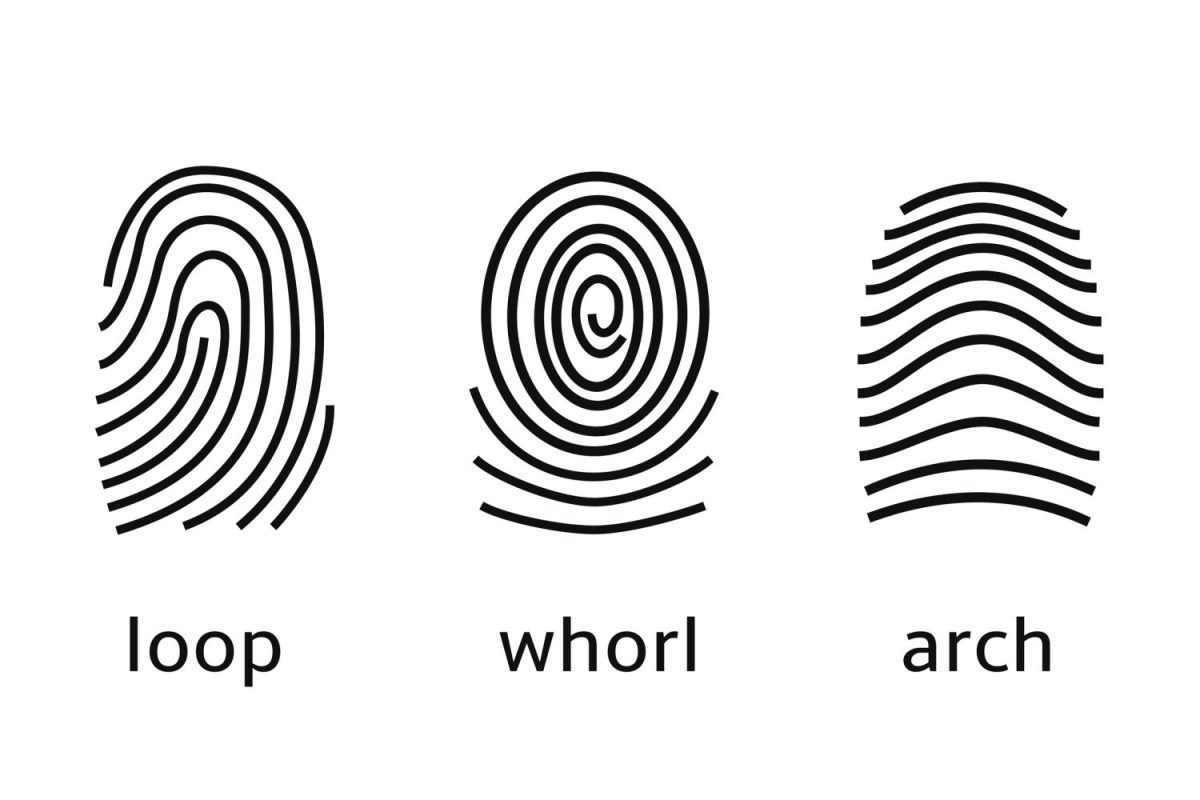
Welcome to the third installment of the Sports and Science column, Letters on Sunspots. Our topic for this issue is: Why do we have fingerprints? First, we have to understand how fingerprints form. A common misconception is that fingerprints are random. In reality, their pattern is due to genetics. There are three different classifications of fingerprints: whorls, loops, and arches. Although genetics don’t directly determine which classification appears on each finger, they do affect the surface of the finger in the womb.
Between the sixth and eighth week of fetal development, the fetus starts to grow thick skin-like nubs called volar pads. These pads only last until around week ten, after which the surrounding skin overtakes them, causing them to seemingly disappear.
The underlying placement of the volar pads on the developing finger will determine the fingerprint classification. If a fetus has higher, symmetrical volar pads, they will produce whorls; low, flat volar pads will produce arches; and leaning volar pads produce loops. Therefore, genetics have an indirect effect on the classification of fingerprints.
Patterns usually run in families as they will have a similar volar pad development and regression. However, there are smaller intricacies within fingerprints that scientists call minutiae. These minutiae vary from person to person, even within families. Minutiae are due to environmental factors within the womb, like placement of the fetus and the density of the amniotic fluid. Even identical twins have different minutiae based on their positioning during fetal development.
As for why we have fingerprints, scientists have numerous ideas as to why they are evolutionarily important. One of which is improved grip on wet objects. The small ridges of our fingerprints, or the dermatoglyphs, allow water to escape between them, preventing slipping. Another idea is that they allow for more sensitivity from our fingertips as the dermatoglyphs help amplify the vibrations when they come in contact with various surfaces. And the last idea is that they offer higher durability and skin protection. The structure of our fingerprints allow us to have more elasticity in the tips of our fingers, limiting blisters and other skin abrasions.
This column will be accepting topic requests. If you have a scientific question you would like explained, you can email [email protected].