








Published: October 27, 2025
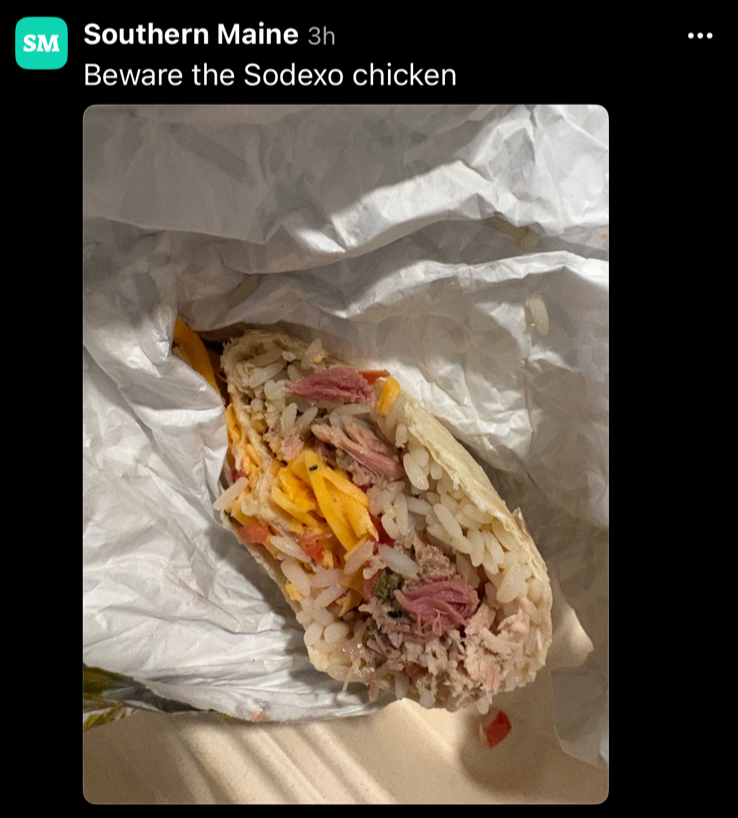
Recently on Yik Yak, there have been posts floating around about undercooked chicken being served in the McGoldrick dining hall, located on the Portland campus. Yik Yak is a platform where users can post anonymously, and fellow users around them can see it. The University of Southern Maine has its own community on Yik Yak, where posts circulated last week. While there have been people complaining about the quality of the chicken served at the Gorham campus, the state of McGoldrick’s chicken is seemingly more severe.
The Centers for Disease Control and Prevention (CDC) warns that eating undercooked chicken can possibly lead to foodborne illnesses, commonly known as food poisoning. There are different germs that can cause illness when ingested, and symptoms may vary depending on those germs. Symptoms that are common among food poisoning are: diarrhea, stomach pain and/or cramps, nausea, vomiting, and fever. The CDC says that if you have blood in your diarrhea, a high fever (meaning a temperature over 102 °F), not being able to keep liquids down because of frequent vomiting, or signs of dehydration, you should see a doctor.
Unlike some foods, it is incredibly important for raw chicken to be cooked appropriately before being served. The Food and Drug Administration (FDA) recommends cooking chicken to a temperature of 165 °F. Once properly cooked, chicken should look white, not pink. The CDC and FDA both recommend other safety practices when handling raw chicken: hand washing after handling raw chicken, keeping raw chicken from touching other foods or preparation surfaces (limiting cross-contamination), and using disposable gloves in food service settings. If undercooked chicken is found in a meal, the rest of the food in the dish or service area with the chicken could also be contaminated with germs that cause food poisoning.
If you notice that the chicken in either dining hall is undercooked, say something to the kitchen staff members. By bringing attention to it, safety measures can be taken, and other food can be protected from contamination. Hopefully, this will also lead to improvements in the quality and safety of USM’s food. Most importantly, if you see that chicken does not look safe to eat, please don’t eat it, and make sure other people in the USM community know to be on the lookout.


